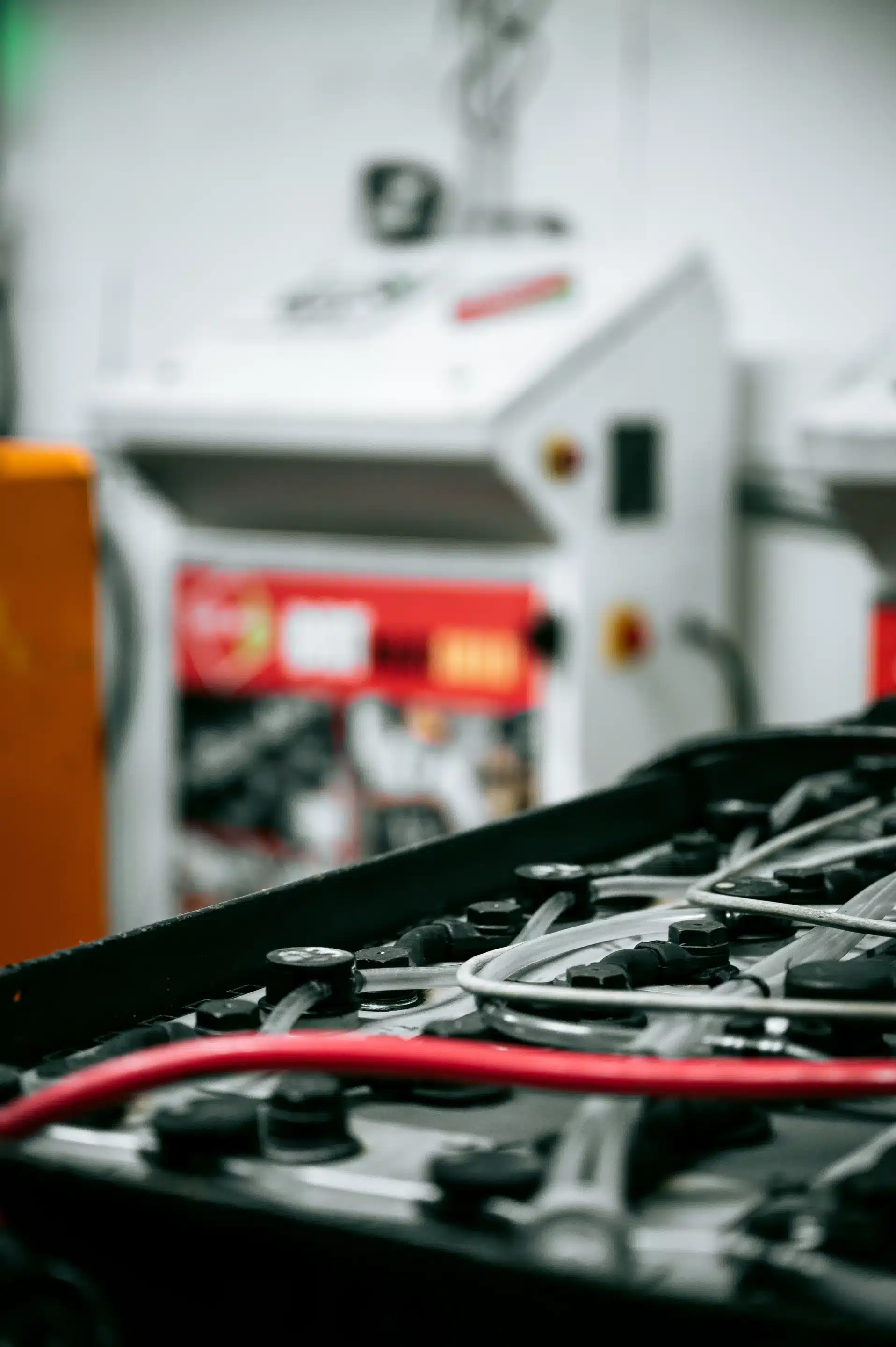




LEAD-ACID | TRACTION BATTERIES | MAINTENANCE & PREVENTION
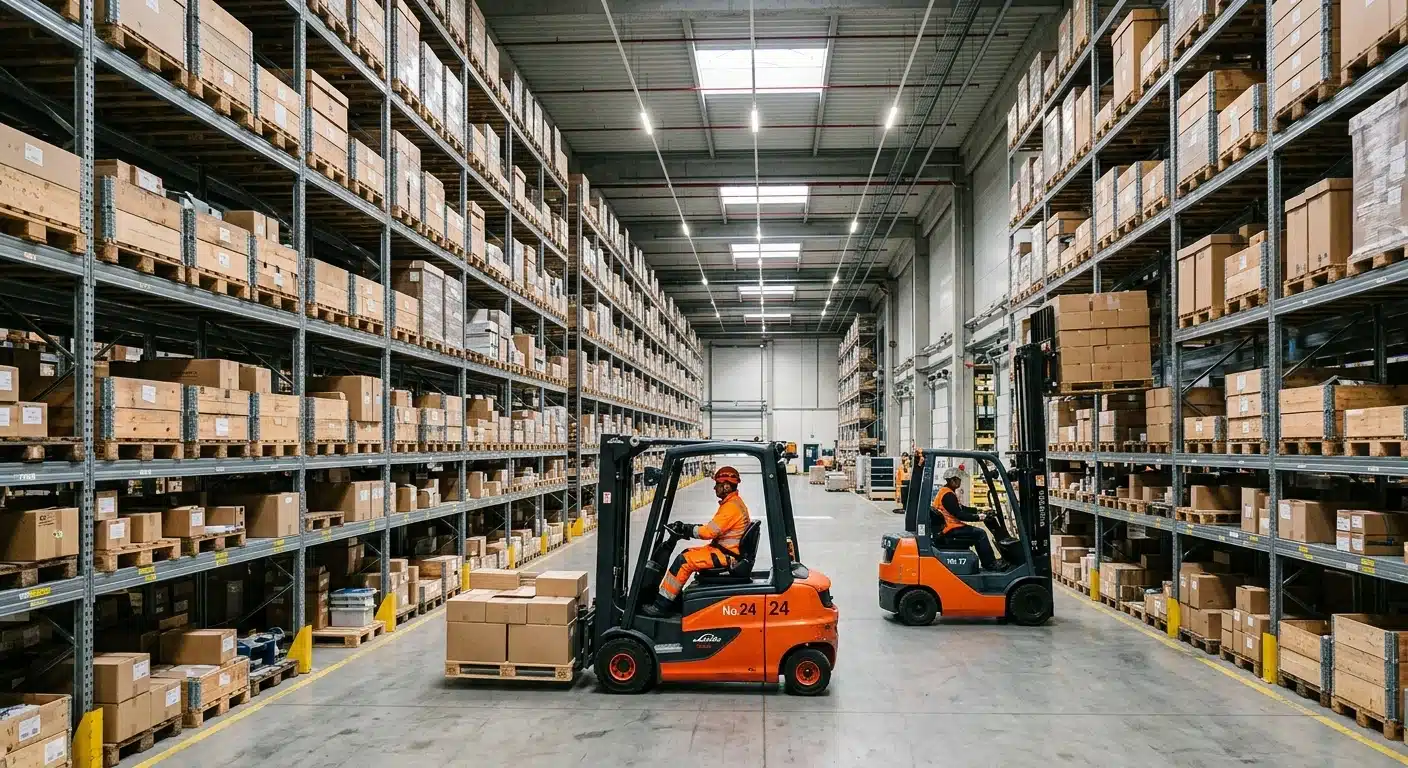
In the management of a forklift fleet, traction battery breakdowns directly impact the supply chain and generate equipment downtime costs.
The majority of these failures do not stem from unavoidable wear and tear, but from a progressive degradation of the cells' internal chemistry, which can be measured and prevented.
The technical causes of capacity loss
A battery failure during a work shift is generally the result of three operational factors:
-
-
Plate sulfation: This chemical phenomenon develops when batteries remain discharged for extended periods or undergo repeated deep discharges. Lead sulfate crystals insulate the active surfaces and reduce the useful capacity.
-
Intermittent partial charging (opportunity charging): Performing short recharges during breaks without completing the full cycle prevents the equalization phase and accelerates the premature aging of the cells.
-
Lack of thermal maintenance and fluid levels: High warehouse temperatures accelerate water evaporation. Without precise topping up of demineralized water, the acid concentration increases, destroying the active material.
-
From visual inspection to capacity diagnosis
Basic checks, such as a simple open-circuit voltage measurement, do not provide the actual state of health of a battery.
Two units can display an identical voltage at rest, yet completely collapse as soon as they are drawn upon by the forklift's traction motor or hydraulic pump.
Preventing breakdowns relies on regular capacity audits. These measurements involve testing the battery under a controlled discharge to precisely identify the behavior curve of each cell and detect failing elements before an on-site failure occurs.
Best practices for forklift battery maintenance
To avoid battery failures on your forklifts (mainly lead-acid traction batteries) and optimize the productivity of your logistics fleet, action must be taken on three pillars: charging, physical maintenance, and anticipating chemical degradation.
Here are the best practices to apply to eliminate these operational disruptions:
1. Master the charging cycles (The golden rule)
Poor charging management is the primary cause of premature failure.
-
- Avoid partial charging (opportunity charging): Unless you use a specific technology (like Lithium or certain adapted AGM batteries), recharging a lead-acid traction battery during 15-minute breaks destroys its lifespan. Every single charge counts as a full cycle.
- Respect the 20% threshold: Never let a battery discharge beyond 80% of its capacity (the forklift's red warning light must be the signal to stop immediately). A deep discharge causes irreversible damage to the lead plates.
- Complete the full cycle: Once charging has started, let it finish to 100%. The final charging phases (equalization) are crucial for balancing the voltage between the different modules.
2. Strict maintenance of water levels
On flooded lead-acid batteries, the electrolyte (a mixture of water and acid) naturally evaporates during charging.
-
- ALWAYS top up AFTER charging: Never add water before charging, as the acid level rises when heating up and risks overflowing, which would cause the battery to lose power.
- Use demineralized or distilled water exclusively: Tap water contains minerals (iron, lime) that create internal short circuits and destroy the chemistry of the modules.
- Check regularly: Depending on the intensity of your operations, check the levels once a week or every two weeks.
3. Cleaning and physical maintenance
-
- Keep battery trays clean and dry: Dust and moisture on top of the battery create micro-leakage currents that slowly discharge the battery and can cause electrical arcing.
- Treat oxidation: If white/whitish deposits (sulfates) appear on the connectors or terminals, clean them with warm water and a brush, then apply an anti-acid grease.
- Check connections: Damaged or loose cables or charging plugs (Anderson connectors) create abnormal resistance, limit charging, and can overheat.
4. Anticipate and correct sulfation (Regeneration)
With time and cycles (especially in cases of prolonged storage when flat or incomplete charges), lead sulfate crystals harden on the plates and prevent the battery from taking a charge.
-
- Measure acid density: Using a hydrometer, check the density of each cell. If discrepancies appear between the modules, the battery is fatiguing.
- Consider preventive or curative regeneration: Before replacing a complete battery pack (which is very expensive), be aware that high-power electrical pulse treatment can break down this crystal layer. This redissolves the sulfate back into the acid, balances the modules, and restores the battery to its original capacity and power at a quarter of the cost of a new one.
Regeneration as a maintenance method
When a battery's runtime decreases, the standard industrial reflex is to plan its replacement with new equipment. However, there is a technical alternative through curative and preventive actions.
By integrating our regeneration protocol into your battery fleet management with our BRT regeneration technologies, you put an end to unexpected breakdowns and concretely extend the service life of your traction batteries.
This treatment involves sending specific electrical pulses to dissolve lead sulfate crystals, restore electrolyte density, and recover the original capacity of the cells.