



Industrial Battery Fleet Management: From a Fixed Operational Cost to a Valuable Financial Asset
29 April 2026
How to Restore Factory Performance of Starter Batteries After Prolonged Storage: From Diagnosis to Restoration
8 June 2026
The FASEP Regen India program, developed in partnership between Be Energy and IIT Hyderabad, marks a significant milestone in the industrial deployment of lithium-ion battery reconditioning in the Indian market. At the core of this initiative is the PTS 800, a secure workstation designed to meet the technical and operational requirements of traction batteries.
In a country where electric mobility is experiencing unprecedented growth, driven in particular by the rise of electric scooters, the issue of battery second life has become a major industrial challenge. It is in this context that the PTS 800 takes on its full significance.
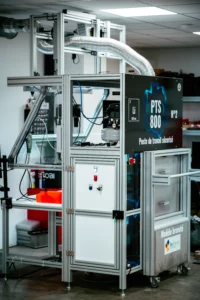
A complete workstation enabling lithium-ion batteries to be handled under optimized and secure conditions.
A workstation designed for real-world conditions
The PTS 800 has been developed to address constraints that reconditioning players face on a daily basis: the diversity of battery formats, the variability of state-of-health at line entry, and the absolute necessity of ensuring operator safety against the thermal and electrical risks specific to high-energy batteries.
Three key pillars structure its design:
- Operational safety, with protections adapted to the specific requirements of lithium-ion traction batteries
- Process reproducibility, thanks to standardized and traceable protocols
- Technical flexibility, enabling work across a wide range of formats
This approach enables operators to rapidly upskill while ensuring a consistent level of quality across all operations performed.
IIT Hyderabad: a strategic academic and industrial anchor
The deployment of the PTS 800 within IIT Hyderabad follows a clear rationale: combining the academic rigor of a leading institution with a strongly industry-driven approach aligned with the realities of the Indian market.
From an educational standpoint, the PTS 800 provides students and researchers with a professional working environment identical to that found in industrial reconditioning workshops. The batteries being processed come from electric scooters in real-world operation, giving the work conducted immediate operational relevance.
This setup enables the pursuit of three complementary objectives:
- Training a new generation of technicians and engineers specialized in battery diagnostics and reconditioning
- Developing and validating protocols adapted to the specific characteristics of the Indian battery fleet
- Producing technical data usable for continuous improvement of equipment and methodologies
Tangible benefits for industrial stakeholders
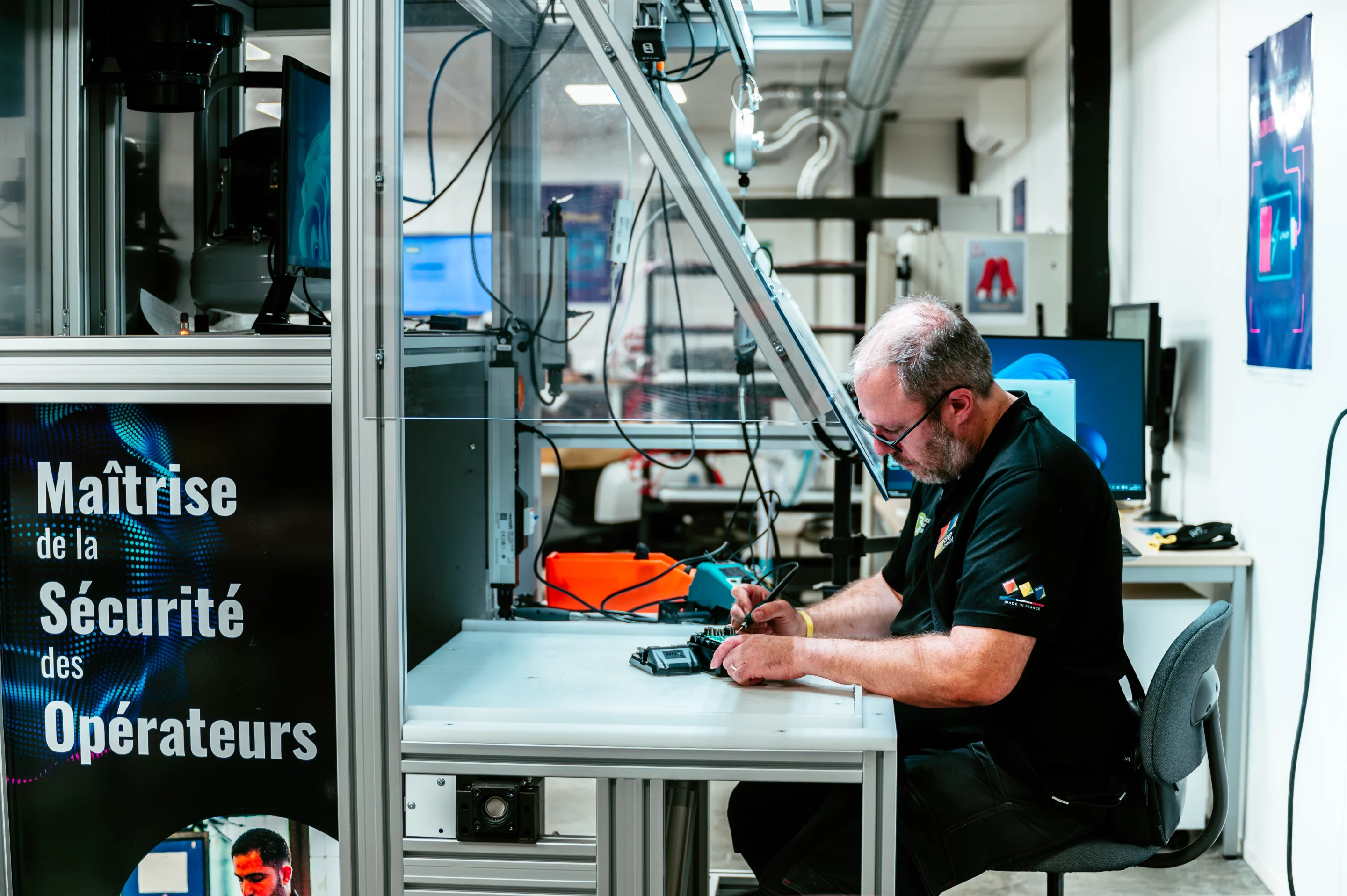
For companies engaged in lithium-ion battery reconditioning, the PTS 800 represents a tangible operational lever. It is not merely a laboratory device: it is an industrial-grade tool designed to support the scaling-up of a production line.
The benefits for industrial operators are direct and measurable:
- Significant reduction in incident risks thanks to integrated protections and proven procedures
- Standardization of diagnostics and interventions, ensuring quality and traceability
- Reduced training time for technical teams, even without prior experience in lithium-ion batteries
- Ability to adapt to market evolutions in chemistries, formats, and protocols
Reconditioning as a pillar of the energy transition
Beyond operational benefits, the deployment of the PTS 800 within the FASEP Regen India program is part of a broader vision: an industry that fully integrates circular economy principles into the battery sector.
In the Battery as a Service model, which is rapidly expanding in India, the effective lifespan of a battery directly determines the economic viability of the service. Extending this lifespan through controlled reconditioning operations means both reducing operating costs for operators, decreasing pressure on critical raw materials, and limiting the volume of electronic waste generated by electric mobility.
In this sense, the FASEP Regen India program provides a concrete demonstration: it is possible to structure a rigorous, scalable, and economically viable lithium-ion reconditioning sector. This model, proven in Hyderabad, is intended to be replicated in other high-potential markets in the years ahead.