



Reuse of stationary batteries: Planning for a second life before recycling
31 March 2026
Industrial Battery Fleet Management: From a Fixed Operational Cost to a Valuable Financial Asset
29 April 2026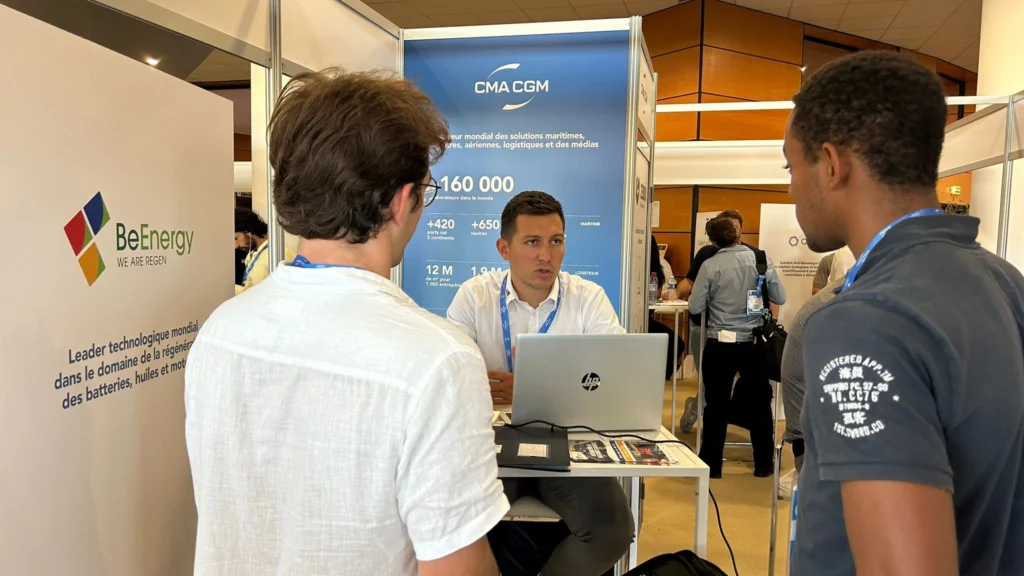
A structural industrial constraint: the accelerated ageing of batteries
The industrial battery regeneration has become a priority for companies facing the accelerated ageing of their equipment fleets.
In intensive industrial environments, batteries are rarely operated under nominal usage conditions. Incomplete charging cycles, multi-shift operation, and high thermal constraints accelerate electrochemical degradation mechanisms.
Whether it is plate sulphation (lead-acid technologies) or cell imbalance (multi-cell systems), the increase in internal resistance inevitably leads to a loss of capacity. For companies, the impact is immediate: reduced fleet autonomy, lower equipment availability, and an increase in premature replacements.
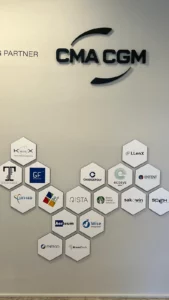
One year later, Be Energy is leveraging the ZEBOX ecosystem to align its proven regeneration technology with the operational requirements of major international corporations.
At the fleet level, this results in higher operating costs and increased industrial waste.
In this context, battery regeneration emerges as a technical solution for extending the actual service life of batteries in operation.
A recognised technology for tomorrow’s industrial challenges
It is in this context that we were selected in 2024 among the 3 finalists of the CMA CGM Startup Awards, out of more than 60 international startups. This selection is based on the technology’s ability to address concrete challenges in the maritime transport, logistics, and industrial infrastructure sectors.
This recognition provides access to ZEBOX, the CMA CGM Group’s accelerator, and enables integration into a structured industrial environment based on real-world use cases.
The objective is clearly operational: to deploy battery regeneration technology at the scale of high-intensity logistics flows, representative of the constraints faced by large international groups.
Operational and economic impact at fleet scale
Integrating battery regeneration into asset management enables several levers to be activated simultaneously:
- reduction of operating costs (OPEX)
- improved equipment availability
- reduction of hazardous waste volumes (WEEE)
- reduction in consumption of critical raw materials
In high-intensity industrial environments, these gains become directly measurable and structurally significant at the scale of a site, fleet, or logistics infrastructure.
Deployment in demanding industrial environments
Our technology is deployed in industrial environments subject to high operational constraints, where usage conditions naturally accelerate battery ageing.
It applies to different types of industrial batteries and energy systems: traction (material handling equipment), auxiliary power (maritime applications), and onboard equipment.
We therefore develop and deploy:
- battery regeneration equipment (BRT range)
- on-site and workshop regeneration services
- safe working environments for handling high-risk chemistries
The technologies covered include lead-acid, NiCd, NiMH, and lithium-ion battery refurbishment without changing their use case.
Intervention is carried out before the replacement threshold in order to optimise the use of existing batteries and extend their service life under real operating conditions.