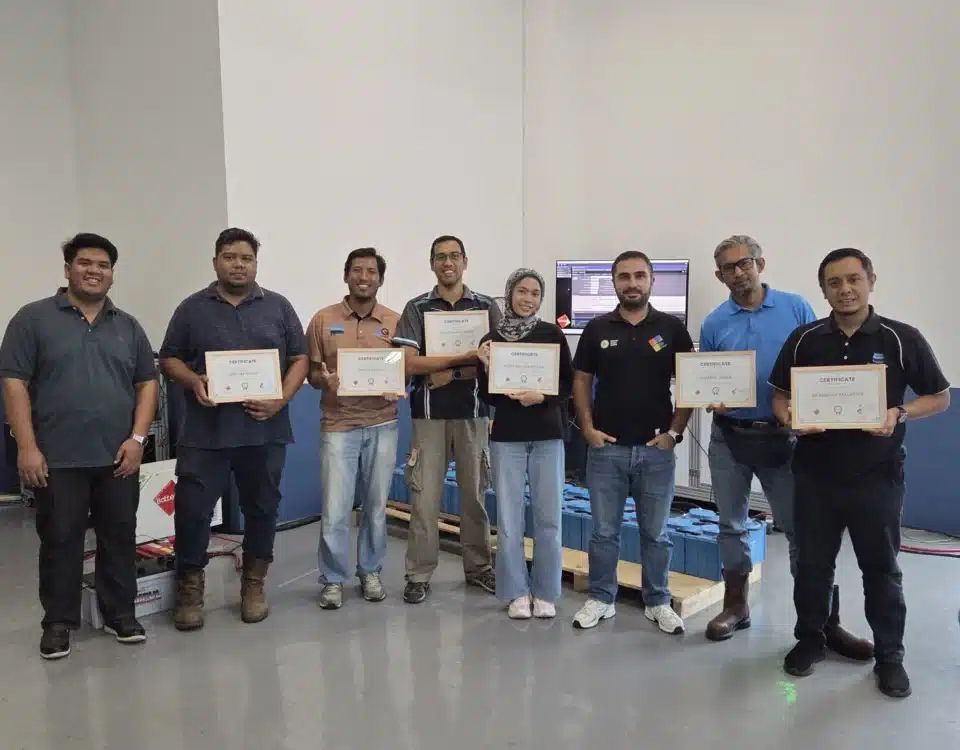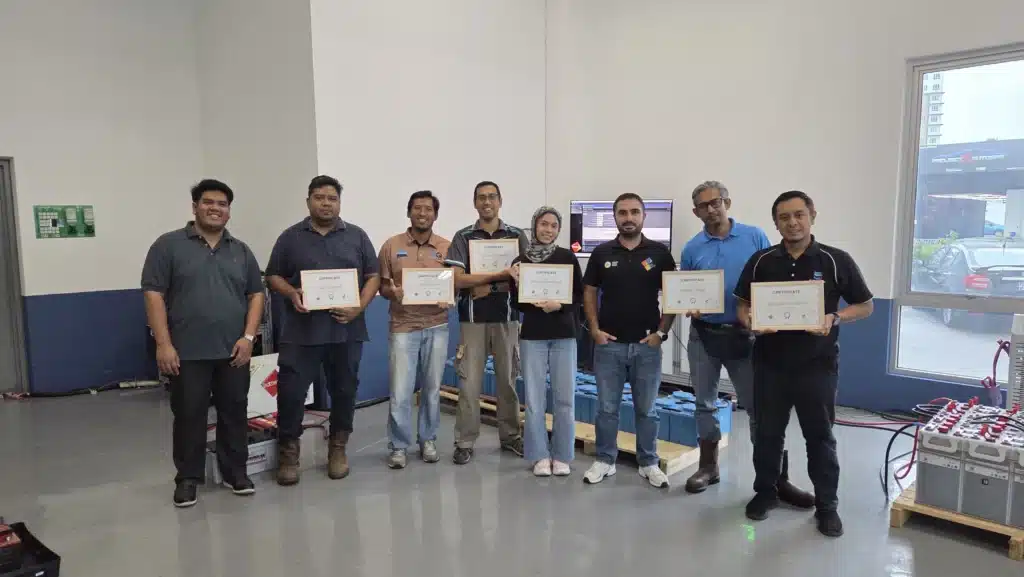





FASEP Regen India: The PTS 800 at the heart of establishing a lithium-ion battery reconditioning facility in Hyderabad
19 May 2026
CENTRE 360: A turnkey solution to start your battery regeneration business
18 September 2026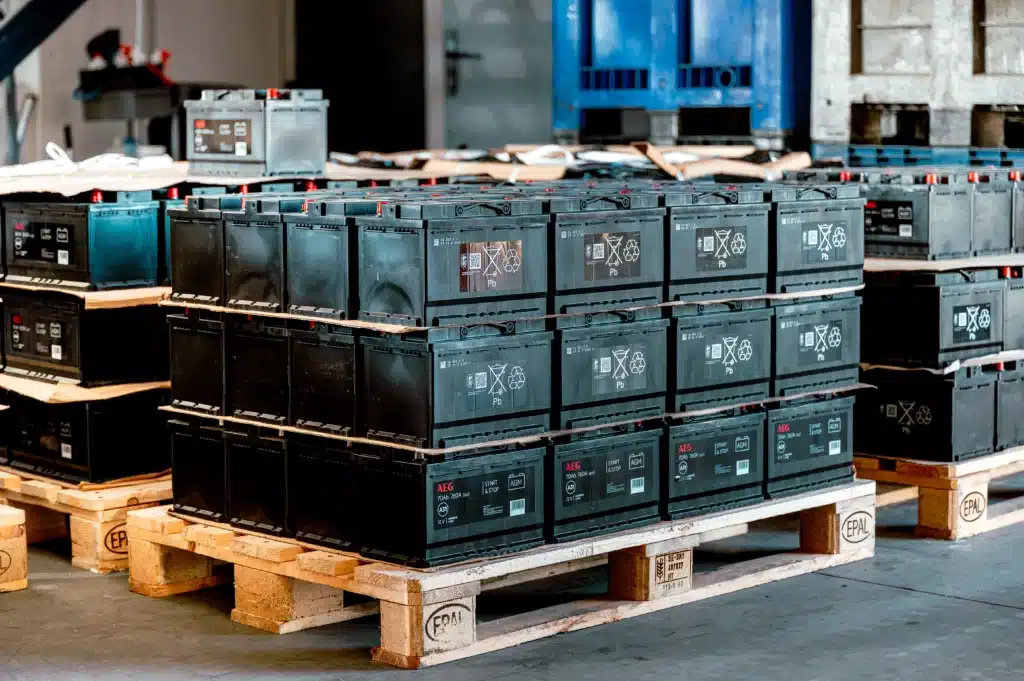
In distribution chains and industrial environments, starter batteries are rarely put into service immediately after production or receipt.
Due to logistical constraints, safety stock levels, and varying turnover rates depending on references, some batteries can remain in storage for several months before being used.
During this time, a subtle but significant phenomenon occurs: performance does not remain perfectly stable.
Batteries that are still new and have never been installed in a vehicle can show measurable variations in starting current, internal resistance, or charging behavior.
Starter batteries stored in a warehouse, where prolonged storage can lead to performance variations between units within the same batch.
A gradual drift in performance without use
Contrary to an intuitive assumption, a lead-acid battery does not remain static when stored.
Even without use, internal mechanisms continue to evolve slowly. Self-discharge gradually alters the state of charge, while sulfation phenomena may develop on the plates. At the same time, internal resistance increases, which directly impacts the battery’s ability to deliver high starting current.
Individually, these phenomena remain gradual, but when combined over several weeks or months, they are enough to create a significant dispersion in performance within the same batch.
An industrial issue: batches becoming heterogeneous
In a logistics context, this evolution leads to a concrete difficulty: batteries from the same initial batch no longer present the same characteristics at the time of testing.
Some retain performance close to their original state, while others show sufficient degradation to be considered non-compliant for immediate sale.
This heterogeneity creates a direct inventory management issue, as it makes decisions regarding release into circulation or disposal difficult without deeper analysis.
From standard testing to the need for industrial diagnostics
Standard tests, often based solely on open-circuit voltage, do not accurately reflect the real state of a battery after prolonged storage.
Two batteries may show identical values while exhibiting completely different behavior under load. This limitation requires a more comprehensive approach, incorporating electrochemical parameters that reflect real operating conditions.
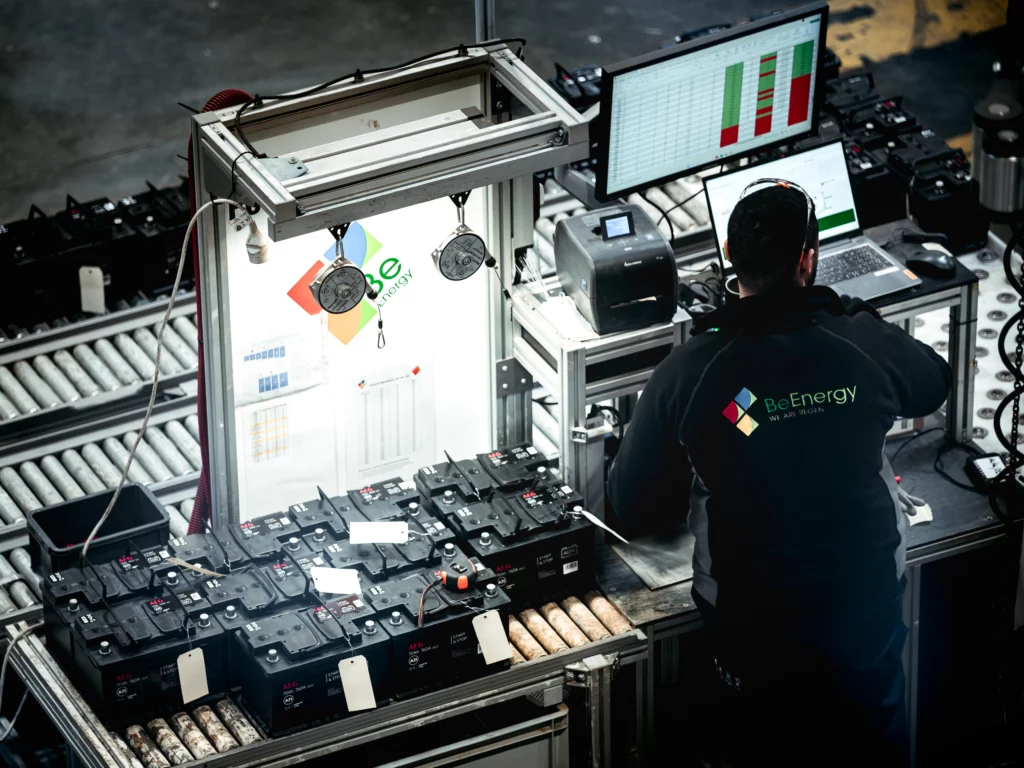
This is precisely where the QTK testing station comes into play. It allows each battery to be qualified based on its real electrical behavior and helps structure inventory according to its recovery potential.
Diagnosis, classification and orientation toward restoration
Once batteries are analyzed using the QTK station, it becomes possible to distinguish several state levels and, above all, identify those whose degradation is still reversible.
In this logic, batteries are no longer considered only as products to be replaced, but as electrochemical systems whose condition can be corrected when appropriate.
Batteries identified as recoverable are then directed toward a regeneration process based on controlled cycles aimed at addressing the phenomena responsible for performance loss, particularly sulfation and reduced plate activity.
This treatment can, in many cases, restore performance close to the original state, especially in terms of starting current and voltage stability.
Real-world processing of a batch of 326 batteries
In a campaign carried out with a major automotive parts distributor in France, a batch of 326 starter batteries from prolonged storage was processed using this complete workflow.
Each battery was individually qualified using the QTK testing station and then directed toward a regeneration process adapted to its electrochemical condition.
At the end of the process, the entire batch was successfully restored, confirming that the observed degradation was mainly due to reversible phenomena induced by storage.
From storage to battery revaluation
This type of result highlights a structural shift in starter battery management.
Rather than considering a degraded battery after storage as a product to be systematically replaced, it becomes relevant to adopt an approach based on measurement, classification and restoration.
In this context, a battery’s value no longer depends solely on its time in storage, but on its ability to be accurately diagnosed via the QTK system and restored when technical conditions allow it.