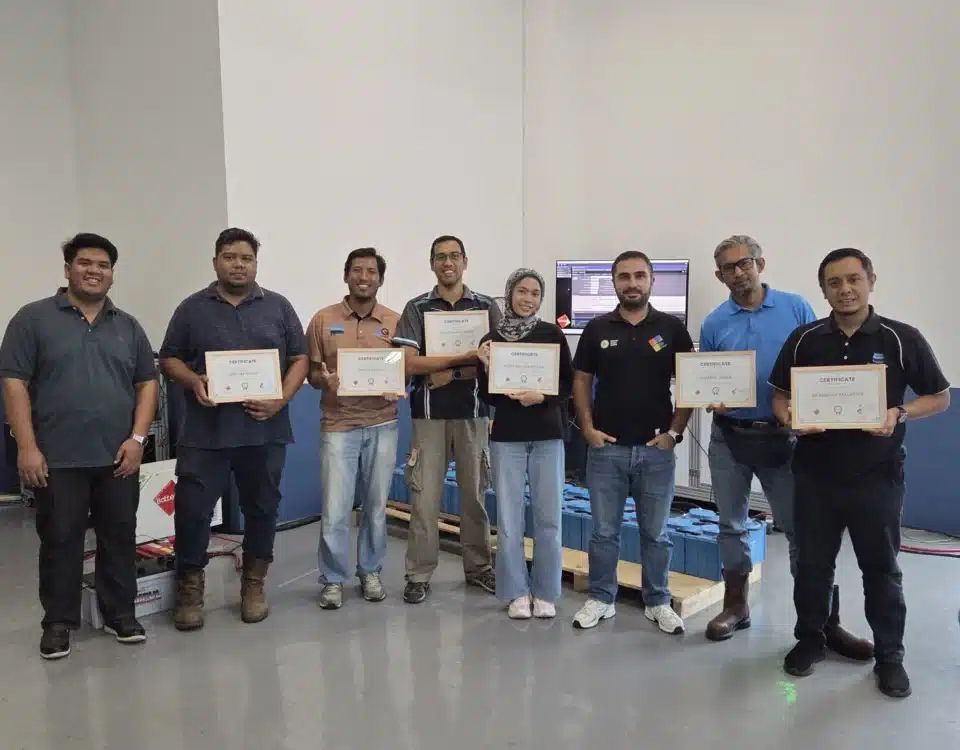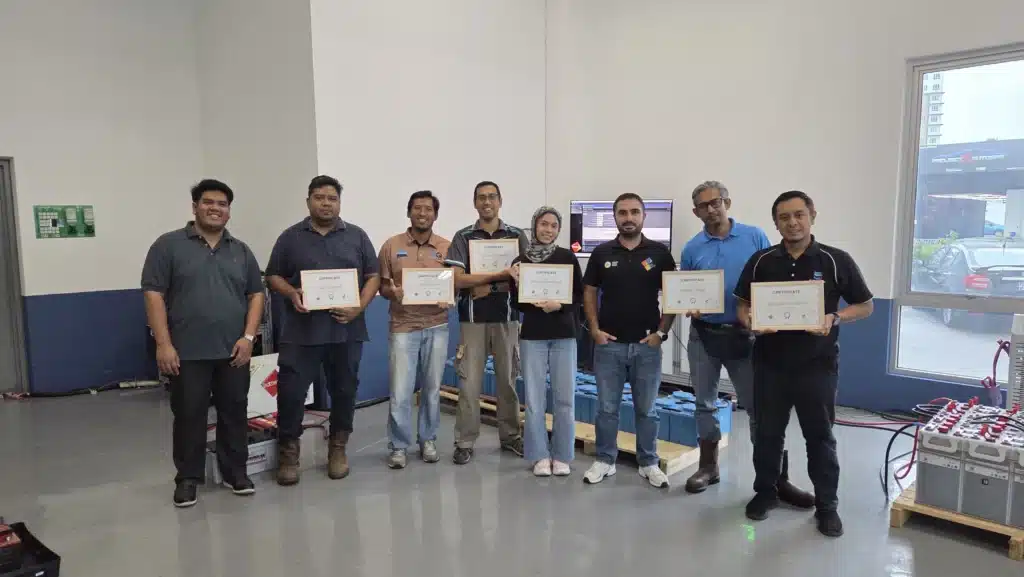




A look back at six months of operation at the Be Energy Cameroon center in Douala
26 February 2026
Reuse of stationary batteries: Planning for a second life before recycling
31 March 2026REBORN Project: Be Energy develops the remanufacturing of EV lithium batteries at the cellular level
R&D & Innovation · ERDF ESF+ FTJ Program · Provence-Alpes-Côte d'Azur Region
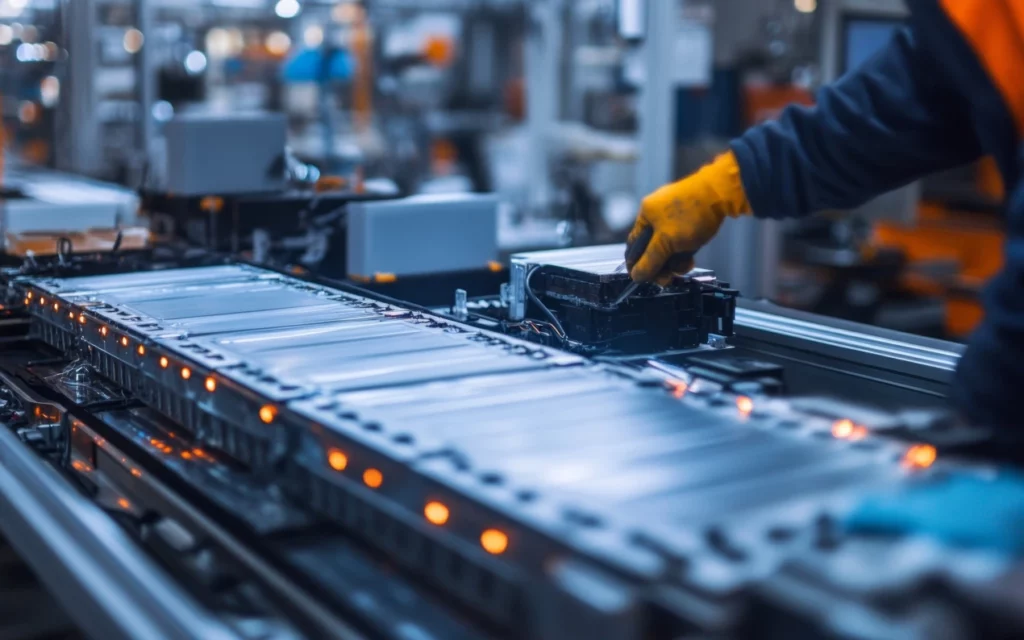
Be Energy wins the REBORN project dedicated to the remanufacturing of lithium batteries for electric vehicles, an industrial innovation aimed at repairing batteries directly at the cell level.
The company was selected as part of the PACA 2021-2027 regional program (ERDF/ESF+/FTJ) to lead this research and development project. The goal is to create the first industrial process for remanufacturing lithium-ion batteries for electric vehicles that can operate directly at the individual cell level, rather than at the module or pack level.
1. Technical background and originality of the project
EV battery remanufacturing already exists on the market, but all known initiatives are limited to module replacement (« casing »): the faulty module is removed and replaced with a new one. No industrial player currently operates at the individual cell level on a line with genuine industrial capacity.
Be Energy's key insight: 80 to 90% of functional capacity loss in a battery pack originates from a single defective cell, which then degrades its module, and in turn the entire pack. Intervening at the cell level makes it possible to preserve nearly all healthy cells and restore the manufacturer's nominal battery lifespan.
This level of intervention — 10× more granular than module-level work — is the core differentiator that convinced the selection committee. Be Energy had already demonstrated this approach on small mobility Li-Ion batteries (e-bikes, scooters) through the in-house development of a Secure Work Station (PTS 800), patented and presented at CES Las Vegas 2025, designed to safely handle lithium chemistry — which is particularly explosive and reactive.
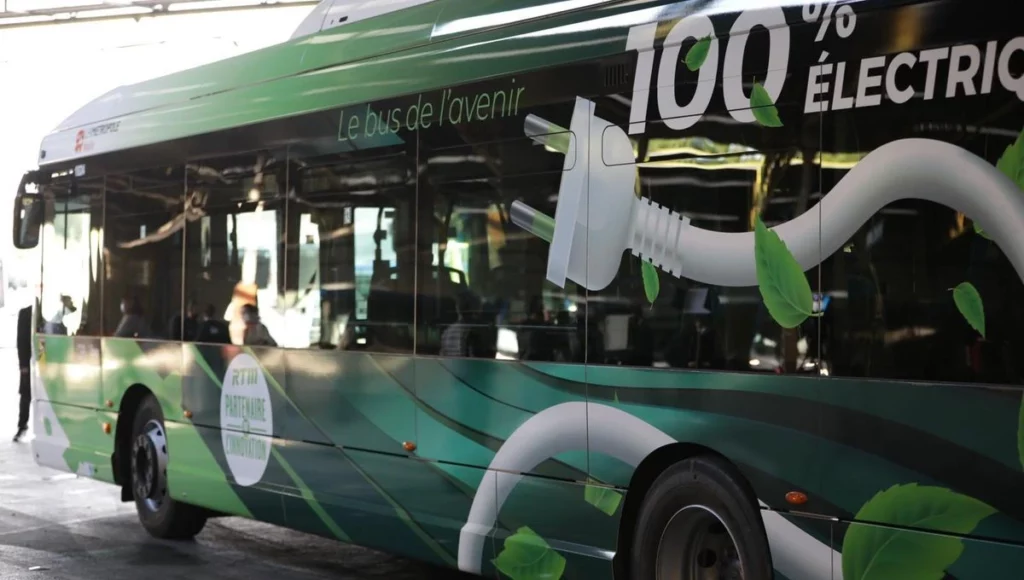
The REBORN project aims to transpose and industrialise this approach for electric car and bus batteries.
- Lower cost than full module replacement
- 10× more precise than module-level intervention
- 70–80% residual capacity in an EV battery considered "end of life"
- 50–70× fewer CO₂ emissions vs. conventional recycling
- 7.71 kgCO₂e avoided per kg of battery processed (LCA RIVERSE/VERIFAVIA)
2. Industrial process in six steps
The REBORN process follows a complete workflow, from collection of the used pack to reinstallation with warranty in the vehicle.
- Rapid initial pack diagnosis (SoH) — BMS connection, OBD/CAN data reading and Electrochemical Impedance Spectroscopy (EIS) testing. Goal: locate the fault (BMS, connectors, module or cell) without disassembly.
- Controlled disassembly — On the PTS 2000, separation of modules, cooling system and BMS units. Manual assisted mode during the project phase, with a trajectory towards semi-automation. Each step is guided by an augmented reality system (Arkite type).
- Testing & identification of defective cells — Capacity measurements, real-time thermal imaging, internal resistance testing. An ML algorithm classifies each cell: reusable, reconditionable, or waste.
- Selective de-soldering and replacement — Cell separation by laser cutting or precision erosion, replacement of defective cells only, using reconditioned cells of identical chemistry, state of health and internal resistance.
- Re-soldering and reassembly — Precision laser welding (prismatic cells) or wirebonding / ultrasonic welding (cylindrical cells 18650/21700). Post-soldering tests: charge/discharge cycles, thermal imaging, electrical measurements.
- Final validation and RUL prediction — Remaining Useful Life calculated by ML model, safety compliance testing (UN38.3), insurance certification for vehicle reinstallation.
3. Technological barriers addressed
- Chemistry and format heterogeneity — Universal diagnostic system (NMC, LFP, NiMH) covering cylindrical and prismatic formats. Tooling protocols adaptable to each pack model.
- Cell-level SoH diagnosis — EIS integrated into a rapid field tool, combined with AI algorithms to estimate SoH and RUL without access to manufacturer data (often OEM-locked).
- Thermal management — Thermal runaway risk addressed by the PTS 2000: continuous thermal camera monitoring, automatic water basin trigger, fire curtains on four sides.
- Reliable welding and re-welding — Comparative testing of all available techniques: laser, ultrasonic, spot welding, wirebonding. Acceptance criterion: electrical resistance equivalent to a new connection.
- Regulatory compliance — Process aligned with the European Battery Directive and UN/ADR dangerous goods regulations. Goal: a reconditioned pack that is certifiable and insurable for vehicle reinstallation.
- Supply chain — Secured through a partnership with a major player in automotive logistics, ensuring test battery supply and end-of-life pack flow management from the experimental phase onwards.
4. The PTS 2000 — high-voltage secure workstation
The project includes the design and manufacture of the PTS 2000 (Secure Work Station), an industrial evolution of the already patented and operational PTS 800.
- Dimensions: 2 m × 1.5 m to accommodate electric car packs and bus modules
- Structure: reinforced concrete or steel, fire and chemical resistant, non-conductive stainless steel work surface
- Active safety: permanent thermal camera, automatic water basin trigger in case of thermal runaway, fire curtains on 4 sides, instantaneous forced air extraction
- Operator guidance: augmented reality (Arkite) to assist and validate each step, full traceability
Note: The PTS 800 is already approved and operational. The PTS 2000 is a direct scale-up, which served as a strong proof of technological maturity in the application.
5. Life Cycle Assessment (LCA) results
Be Energy commissioned RIVERSE, audited by VERIFAVIA, for a comparative LCA. Functional unit: 1 kg of treated Li-Ion battery. Reference framework: GWP100 IPCC 2021, ecoinvent 3.9.1 database.
| Lifecycle step | Reference scenario (kgCO₂e) | Be Energy scenario (kgCO₂e) |
|---|---|---|
| Used battery collection | 0.72 | 0.46 |
| Treatment / reconditioning | 2.02 | 9.97 |
| New battery production (avoided) | 15.4 | — |
| Total emissions | 18.14 | 10.43 |
| Avoided emissions per functional unit | — | 7.71 |
Conservative assumptions: 30% regeneration success rate, waste batteries transported 700 km by truck to recycler. In real conditions, the environmental gain will be higher.
6. Budget and project team
The project runs over 24 months with a total budget exceeding €1.3 million, combining public funding through the FTJ and private investment. This budget covers all project needs: human resources, equipment, infrastructure and environmental impact studies.
The majority of funds are dedicated to human resources. The project team is made up of specialised technical profiles — engineers, technicians and data science experts — with several new hires planned from the outset. R&D is led by a PhD specialist in complex system prognostics and energy systems, supported by a multidisciplinary team covering electronics, product development and industrial operations.
The remaining budget is allocated to three main items:
- manufacture of the high-voltage secure workstation (PTS 2000)
- infrastructure for the experimental site in the Bouches-du-Rhône
- supply of batteries, modules and cells required for the testing phases
A dedicated envelope also covers the full Life Cycle Assessment and its independent audit.
7. A world-class industrial ecosystem
The REBORN project benefits from the active support of major industrial groups operating across automotive logistics, passenger transport, used vehicle distribution and the broader automotive sector. These partners collectively represent tens of billions of euros in annual revenue and operate on a global scale.
The automotive logistics sector sits at the heart of the project: a leading player in vehicle transport and distribution provides the test batteries and hosts the experimental site in the Bouches-du-Rhône. This partner also manages the end-of-life pack logistics flow from the experimental phase onwards, removing one of the most common barriers to this type of project.
The automotive industry contributes through a major national manufacturer whose dedicated reconditioning division has confirmed its interest in deploying the process on its own electric models. The public transport sector provides electric bus batteries — with a unit value exceeding €200,000 — for large-capacity testing phases.
Finally, the project builds on validation already achieved in small mobility, with a national rollout currently underway with a leading public operator following 12 months of successful testing. At the European level, Be Energy is involved in 3 projects under the Horizon Europe programme within the Batt4EU partnership, confirming the recognition of its expertise across the European battery value chain.
Why this project was selected
1. Demonstrable technological maturity. The PTS 800 is patented, operational, and being rolled out nationally. REBORN is a scaled-up extrapolation, not a promise.
2. Territorial and industrial grounding. A local value chain in the Bouches-du-Rhône built on an already structured ecosystem spanning logistics, transport and automotive — a priority criterion of the Just Transition Fund for industrial basin renewal.
3. Quantified and audited environmental impact. 7.71 kgCO₂e avoided per kg of battery processed, certified by RIVERSE/VERIFAVIA and aligned with the priorities of the Just Transition Fund.